

 Immersion
FAQ: all the answers to your questions about FIL stays
Transport / Transfers / Arrivals / Departures
1. Can we arrive at a different airport or station from the one indicated?
We can offer private transport, but we have to give you a quote depending on where you want to arrive.
2. What happens if my child misses their flight/train, etc.? Do you wait for them?
Depending on the situation, if it is on arrival, we will have to organise an emergency “pick-up”, which could be an individual transfer that will be charged to you.
3. My child will be travelling alone for the first time – do you contact us when they arrive safely?
A few days before the stay, we send you the photo / phone number / meeting point of the team leader who will pick up your child. When the participant arrives, we send you an email (or we ask your child to call you!).
4. Arrival time by car / What time can we arrive by car on the day of arrival? On the day of departure?
Between 4 pm and 7 pm. If that isn’t possible, we will be there anyway to welcome them.
10 am on the day of departure.
5. If our child arrives in Girona, is that all right?
Yes, it is possible, but it may make for a very long day for the child, who might have to go to Barcelona anyway with the team leaders, because they will be picking up other participants there that day.
6. For the return by train from Perpignan station, how will my child find their carriage?
Our team leader will help your child find their train. Our team leader cannot always go onto the platform, but your child can ask the train staff and other passengers to find their carriage easily.
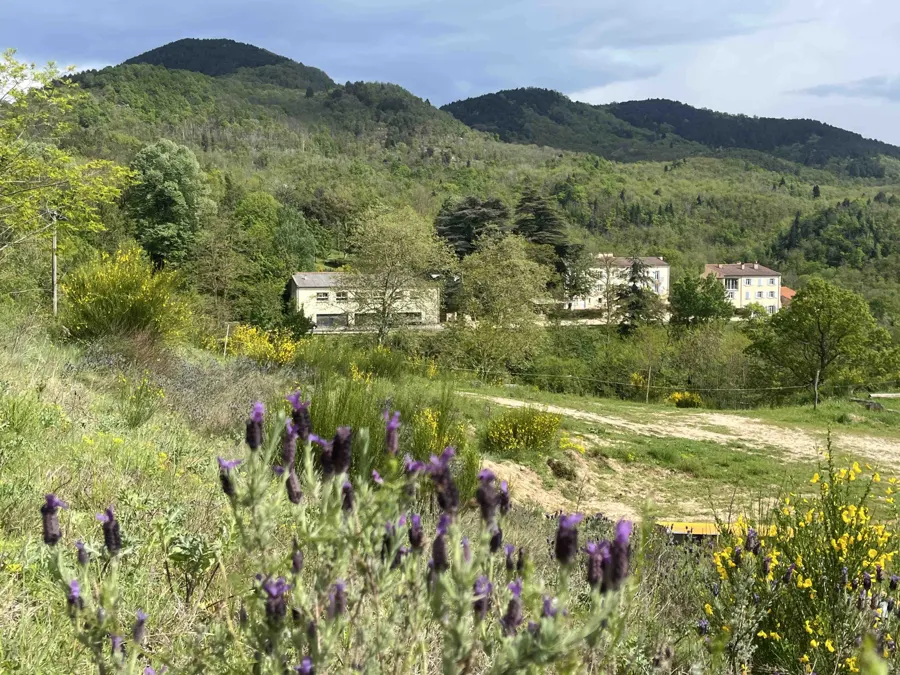
7. How do I find Le Noell?
- Google Maps: Lô Noell 66260 Saint-Laurent-de-Cerdans
- GPS: latitude: 42.397861, longitude: 2.6335490000000163
- From Barcelona: AP-7 motorway towards “France”
Exit no. 3: Maçanet de Cabrenys
Then towards France/Perpignan and turn left onto the GI-502 “Maçanet de Cabrenys / Arles sur Tech” - Recommended route: via Spain
Easy access by the AP-7 motorway (towards France);
Exit 2 towards “La Jonquera”
Stay on the right and take the N-II towards Figueres/Girona.
At the roundabout, take the 1st exit onto the GI-500 towards Agullana, then GI-504, GI-502, GI-503, going through Damius and Maçanet de Cabrenys.
Enter France and go through Coustouges.
In Saint Laurent de Cerdans, turn right towards Le Noell (towards the school).
Follow the signs “Le Noell” (for 5 km).
8. Problem with a cancellation and the airline?
We obviously suggest that you take out travel cancellation insurance for flights.
9. What is the minimum age for a child to travel alone/unaccompanied on a French train?
Children can travel alone from the age of 12 on trains in France, but some restrictions may apply depending on the railway company.
Note: if you have any other questions, do not hesitate to contact us. We are here to help make your child’s experience unforgettable and stress-free!
Child’s age / Maturity / Group / Brothers and sisters
1. My child is “mature for their age” and is in the younger group but prefers the company of older ones – is there much mixing?
Most of the children in the younger group are in the upper part of the age range, for example 13 to 15. There is interaction with the older young people throughout the stay, at different times of the day.
2. I am sending a brother and a sister in different age groups: will they see each other?
They will be in different groups but will be able to see each other during some free time. They can also tell us if they miss each other and would like to spend more time together, and we will be able to arrange it.
3. My child is almost 11: is it possible for them to take part?
Our summer programmes start from age 11, if your child has already been learning French for at least a year. Under French law, the distinction is made for children under 6, so we can welcome 10-year-olds, but:
- First, let us consider the child’s age during the summer: will they be 10, or closer to 11 in July/August?
- Second, we need to know their maturity and their level of French. If they have a good level of French, they will be in a better position to interact even though they are younger. Also, it is important for parents to be aware that topics suitable for 13/14-year-olds to discuss in their French workshops may not always be suitable for a 10-year-old.
- Finally, the child’s physical appearance may be taken into account by the other children at this age; for example, a taller child may feel more confident in a group with older children.
With these criteria, we would accept and welcome your child if:
- They have a good level of French
- They will be closer to 11 during the summer
- Their maturity and appearance can be likened to those of an older child.
I hope these answers will help, because our overall aim is for your child to be comfortable and happy here and to have a good time in their group of 11/15-year-olds. Every child is different, so please take all this into account.
4. How many participants are at the camp during a stay (and do you have all ages from 11 to 17 together?)
We separate the groups of 11 to 15 and 16 to 17 (different activities, timetables…). In general, we welcome a maximum of 22 younger and 23 older participants at the same time, i.e. 45 teenagers during a stay.
5. My child will turn 18 during the stay
Your child can exceptionally take part in a stay. However, as they will be considered an “adult” by the French government, they will have to agree to follow the camp rules like a participant under 18.
They will then have to sign a slightly different agreement from the usual one:
PARTICIPANT’S COMMITMENT
The participant undertakes to:
- speak French;
- contribute to a good atmosphere in the group;
- follow instructions and respect the equipment;
- use connected devices wisely and display only content appropriate to their age; not show other participants content that is not suitable for their age;
- respect the integrity and privacy of others and always adhere to the principle of consent; especially because I am an adult;
- not smoke without parental permission;
- not possess, consume, sell or buy alcoholic drinks or drugs.
If these rules are not respected, FIL reserves the right to send the participant home at the expense of their parents/legal guardians.
Level of French
1. My child is 12 and this summer will have studied French for one year. Will your programme be too difficult for them?
We welcome teenagers who have had at least one year of French lessons. Your child should be able to talk about themselves and their family; they might be able to say in French “My name is..., I live in..., I have three brothers, a sister and a dog...”, or ask “Can you pass me the bread?”. They should be comfortable with simple sentences like these.
2. I am not sure of my child’s exact level of French – do you need to know in advance?
We do not run a test on the first day, but we hold an informal interview in French with a team leader.
3. Does my child receive proof/a certificate of their spoken and written French skills at the end of the stay?
Yes. At the end of the stay, we give your child a certificate assessing their level in listening comprehension and speaking, but not in writing.
4. My child is a beginner
We generally welcome teenagers who have had at least one year of French lessons. The participant must be able to talk about themselves and their family; they might be able to say in French “My name is..., I live in..., I have three brothers, a sister and a dog...”, or ask “Can you pass me the bread?”. These skills make everyday life easier.
However, we might be able to welcome your child at FIL if they could take a few private lessons before arriving, perhaps at a “language school” near you?
Health / Safety
1. Is there a doctor on site at the camp?
Although we do not have a resident doctor on site, we have team leaders trained in first aid. In addition, a local doctor is nearby and can step in quickly if needed.
2. How do you handle my child’s medication?
We ask parents to provide all the medication their child needs at registration. It must be accompanied by a medical prescription detailing the dosage and specific instructions. The medication will be stored safely and given according to the instructions.
3. My child has an allergy – how do you ensure their food safety?
We take food allergies very seriously. Please tell us about your child’s allergies in advance. Our kitchen team is trained to prepare suitable meals and to avoid any cross-contamination.
4. What should I do if my child gets hurt during the stay?
In the event of an injury, our trained team leaders will give the necessary first aid. If the situation requires it, we will contact the parents immediately and arrange transport to the nearest medical centre.
Activities / Leisure
1. What activities are offered during the stay?
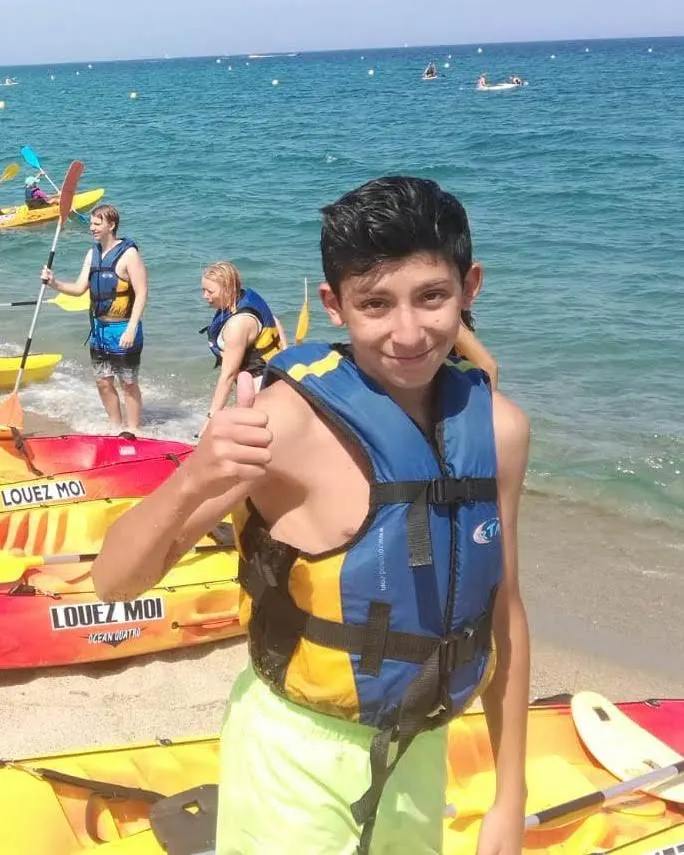
We offer a wide range of activities, including sports, cultural and creative workshops, and educational outings. Every day is full of opportunities to learn and have fun in a safe environment.
2. Are the activities suitable for all skill levels?
Yes, our activities are designed to be accessible at all levels. Our team leaders adapt the activities to make sure every child can take a full part and enjoy the experience.
3. Can my child choose their activities?
We encourage participants to choose from a variety of activities offered each day, according to their interests and preferences. This lets them personalise their experience and discover new passions.
Note: if you have any other questions or concerns, do not hesitate to contact us. We are committed to offering your child an enriching and memorable experience!